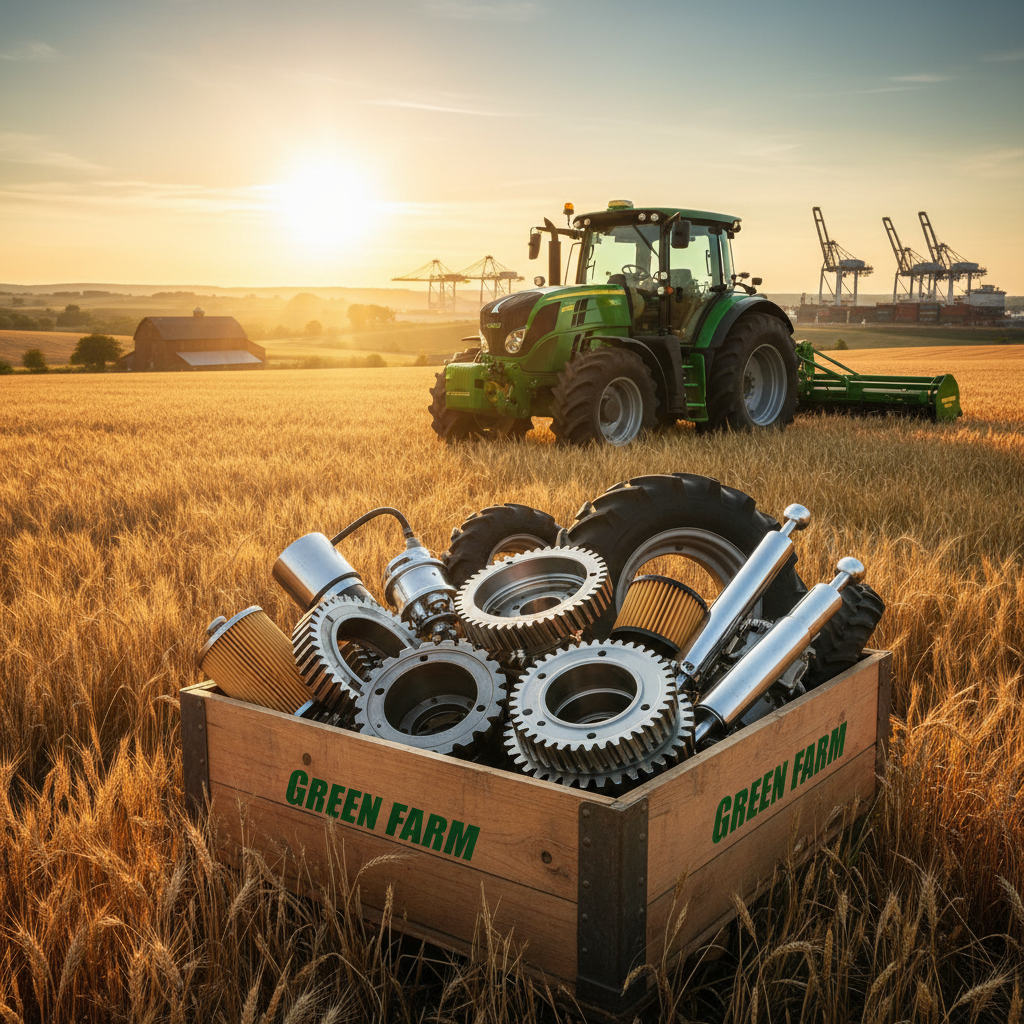
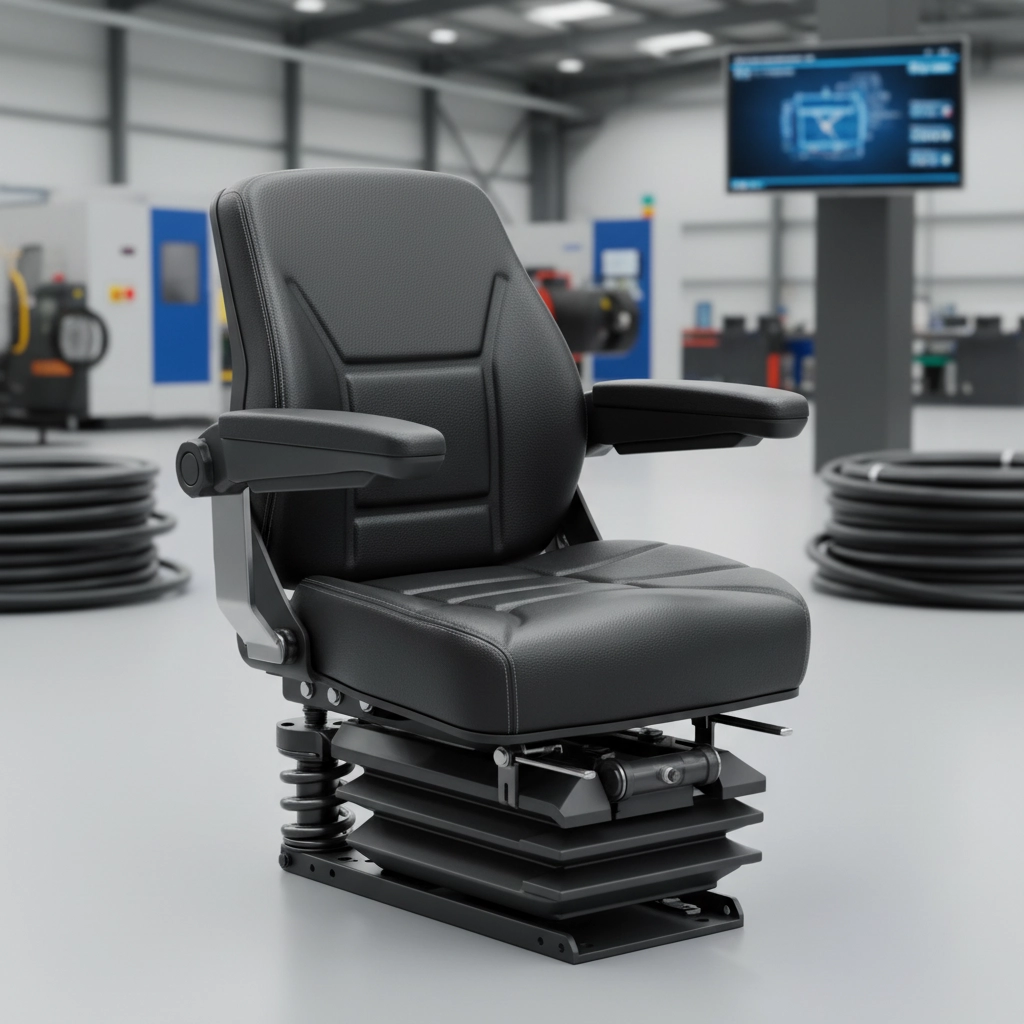
The agricultural machinery sector is currently witnessing a significant pivot toward operator-centric design, where the intersection of ergonomic science and mechanical durability is paramount. As tractor operation hours increase in large-scale farming, the demand for custom tractor seats has shifted from simple comfort upgrades to essential health and productivity requirements.
Prolonged exposure to whole-body vibration (WBV) and poor lumbar support are primary contributors to operator fatigue and long-term musculoskeletal disorders. This challenge forces OEMs and fleet managers to evaluate seating solutions that can mitigate mechanical stress while maintaining the ruggedness required for unpredictable field environments.
This analysis explores the engineering requirements of high-performance operator seating and provides a framework for evaluating the technical specifications that differentiate standard components from specialized industrial solutions, including insights relevant to the product range provided by Hebei Changshuo Tech Co., Ltd.


The fundamental architecture of industrial seating relies on a synergistic relationship between the structural frame and the damping system. A robust steel chassis provides the necessary stability, while the integration of high-density foam and adjustable suspension mechanisms ensures that the operator is isolated from the chassis's direct mechanical shocks.
In specialized configurations, the focus shifts toward modularity. By utilizing standardized mounting interfaces, manufacturers can adapt seating units to various tractor models, ensuring that the center of gravity remains optimal for the operator's reach and visibility.
Effective seat design is governed by anthropometric data, ensuring that the lumbar support and seat depth accommodate a wide range of operator sizes. The curvature of the backrest is not merely for comfort but is an engineering response to reduce spinal compression during long-duration tasks.
Material selection plays a critical role in the long-term viability of the seat. The use of wear-resistant fabrics or PU leather is essential for resisting the abrasive nature of agricultural environments, where dust, moisture, and chemical exposure are constant.
Furthermore, the integration of adjustable armrests and height controls allows the operator to maintain a neutral posture. This reduction in muscle tension directly correlates with a decrease in operator error and an increase in overall machine efficiency.
Agricultural machinery often operates on uneven terrain, creating a spectrum of low-frequency vibrations that can lead to chronic fatigue. To counteract this, engineering teams implement various suspension levels, from simple mechanical springs to air-ride systems.
Anti-corrosion coatings on the steel frame are equally critical. In the context of the tractor spare parts business managed by Hebei Changshuo Tech, ensuring that components can withstand oxidative stress in humid or saline environments is a primary quality benchmark.
Evaluating the performance of different seating tiers requires a normalized scoring system based on key operational metrics: comfort, durability, ease of installation, and shock absorption. Standard seats typically prioritize cost, whereas customized industrial solutions prioritize the mitigation of operator fatigue.
The following data represents a normalized engineering assessment of various configuration profiles, highlighting the trade-offs between basic utility and advanced ergonomic integration.
The application of specialized seating varies significantly depending on the tractor's role. In heavy-duty tillage operations, the primary requirement is maximum shock absorption to handle sudden ground irregularities. Conversely, in precision planting or spraying, the focus shifts toward stability and the ability to maintain a consistent viewing angle for long periods.
For fleet managers, the integration of custom tractor seats involves evaluating the total cost of ownership. While higher-specification seats require a greater initial investment, the reduction in operator downtime and the extension of the component's service life through superior materials provide a clear long-term ROI.
The next evolution in operator seating is the move toward "smart" interfaces. We are seeing an increasing interest in seats that can automatically adjust their suspension parameters based on real-time sensor data from the tractor's chassis, effectively creating an active damping system.
Additionally, there is a growing trend toward sustainable material science. The industry is exploring bio-based polymers and recycled high-strength fabrics that maintain the durability of PU leather while reducing the environmental footprint of the manufacturing process.
As autonomy increases, the "seat" is evolving into a "control hub." This transition requires a redesign of the ergonomic layout to accommodate different interaction modes, where the operator may switch from active driving to supervisory monitoring.
Choosing the correct seating configuration requires a systematic comparison of technical trade-offs. Buyers must weigh the necessity of specific features, such as lumbar support or specialized upholstery, against the operational intensity of their equipment.
The decision framework should prioritize the primary stressor of the environment. For example, in high-dust environments, the ease of cleaning and the permeability of the fabric become more critical than the complexity of the suspension system.
The following matrix provides a comparative framework for different configuration profiles based on common industrial requirements.
| Configuration Type | Support Level | Durability Factor | Primary Use Case |
|---|---|---|---|
| Basic Profile | Standard | Medium | Light Utility/Short Shifts |
| Standard Profile | Enhanced Lumbar | High | General Purpose Farming |
| High-Duty Profile | Reinforced | Industrial Grade | Heavy Tillage/Construction |
| Precision Profile | Adaptive | High | Precision Planting/Spraying |
| Comfort-Max Profile | Full Ergonomic | Premium | Long-Haul/High-Hour Ops |
| Industry Baseline | Basic | Standard | OEM Entry-Level Fitment |
Longevity is primarily determined by the combination of frame coating and foam density. An anti-corrosion coating prevents the steel chassis from degrading in moist environments, while cold-molded high-density foam resists "sagging" or permanent deformation over time. Additionally, the choice between PU leather and fabric affects how the seat resists tears and chemical degradation from fertilizers or fuels.
The suspension system acts as a mechanical filter for whole-body vibration (WBV). By absorbing high-frequency shocks and dampening low-frequency oscillations, the system reduces the muscular effort required by the operator to stabilize their body. This directly prevents chronic lower back pain and maintains mental alertness during extended shifts.
Yes, most industrial seating is designed with modular mounting plates. However, compatibility depends on the bolt pattern and the available clearance within the cab. Engineers typically verify the footprint of the new seat against the existing chassis to ensure that adjustments (like reclining or sliding) do not interfere with the steering column or controls.
Cold-molded foam is created through a chemical reaction in a mold, resulting in a more uniform cell structure and higher density. Unlike standard cut foam, which can lose its shape quickly under heavy loads, cold-molded foam provides consistent support and returns to its original form more effectively, significantly extending the seat's usable lifespan.
Buyers should look for specific adjustable parameters: lumbar support depth, seat tilt, and height range. A truly ergonomic seat should allow the operator to maintain a 90-to-110 degree angle at the hips and knees while providing continuous contact between the lower back and the backrest, regardless of the operator's height or weight.
Routine maintenance includes cleaning the upholstery to remove abrasive grit, lubricating the sliding rails and adjustment levers, and inspecting the suspension springs or air bladders for leaks or fatigue. Regular checks ensure that the ergonomic benefits are not compromised by mechanical friction or component failure.
The transition toward specialized custom tractor seats is an investment in both human health and operational uptime. By prioritizing the integration of high-density materials and vibration-damping architectures, operators can significantly reduce the physiological toll of agricultural work, leading to higher productivity and lower turnover.
Ultimately, the selection process must move beyond simple cost-per-unit and instead focus on the technical alignment between the seat's specifications and the machine's operational environment. For those seeking reliable tractor spare parts and seating solutions, Hebei Changshuo Tech Co., Ltd. provides the engineering foundation necessary to maintain high standards of operator comfort and mechanical resilience.